

Awards
2025 National iAward – Technology Platform
Section titled “2025 National iAward – Technology Platform”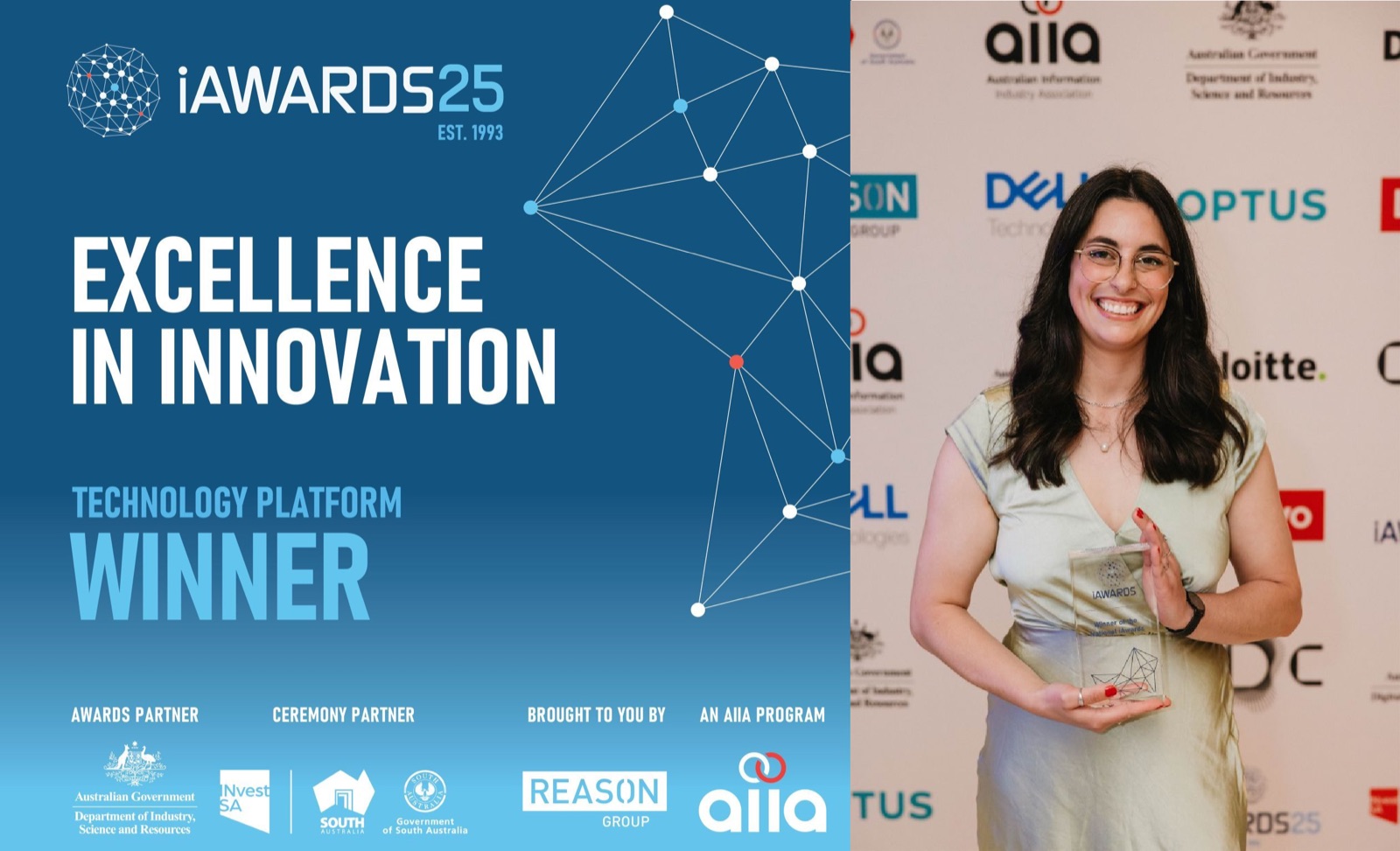
Image credit: Australian Information Industry Association (AIIA)
Neurodesk won the Technology Platform category at the 2025 National iAwards, presented by the Australian Information Industry Association (AIIA) in Adelaide. The iAwards are Australia’s longest-running awards for innovation in the digital space.
The AIIA noted that the “Neurodesk project embodies the essence of open science and has already demonstrated sustained and impactful contributions to the field”, and iAwards judge Litsa Roberts highlighted its role in “simplifying neuroimaging, fostering collaboration and empowering scientists to handle large datasets”. Dr Michèle Masson-Trottier, Postdoctoral Research Fellow at The University of Queensland, presented Neurodesk to the judging panel and accepted the award on behalf of the team: “This recognition validates everything we’ve worked toward as a team.”

Dr Michèle Masson-Trottier accepting the award on behalf of the Neurodesk team. Image credit: Australian Information Industry Association (AIIA)
The award recognises Neurodesk as an open-source platform for reproducible neuroimaging research, led by The University of Queensland and the National Imaging Facility in collaboration with Swinburne University of Technology and the University of Sydney, serving well over 4000 active monthly users across more than 70 countries.
Read more:
- Pulse+IT: Neurodesk wins iAward for technology platform
- UQ Centre for Health Services Research: Neurodesk wins national iAward for technology platform
- Australian National Imaging Facility: National award for Neurodesk’s pioneering open science neuroimaging platform
- UQ School of Electrical Engineering and Computer Science on LinkedIn
2023 UQ Research Culture Award – Conduct of Research, Reproducibility & Open Research Practices
Section titled “2023 UQ Research Culture Award – Conduct of Research, Reproducibility & Open Research Practices”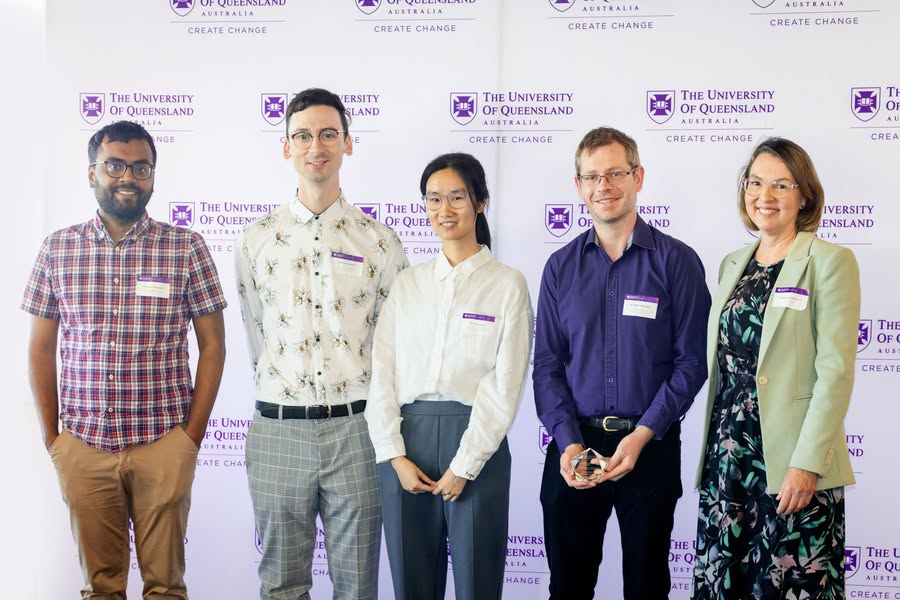
The Neurodesk team receiving the UQ Research Culture Award. Image credit: AIBN at UQ
The Neurodesk team won the Conduct of Research, Reproducibility & Open Research Practices award at The University of Queensland’s Research Culture Awards, recognising the team’s work in lowering research barriers by providing access to open data, software, and educational resources, and in promoting transparency and collaboration in the research community.
Read more: